


 0
0
 0
0
What Is IP Logging?
Every device connected to the internet has an IP address — a unique identifier that looks something like 192.168.1.1 or 73.45.182.94. When you visit any website or use any online service, your IP address is transmitted as part of the connection.
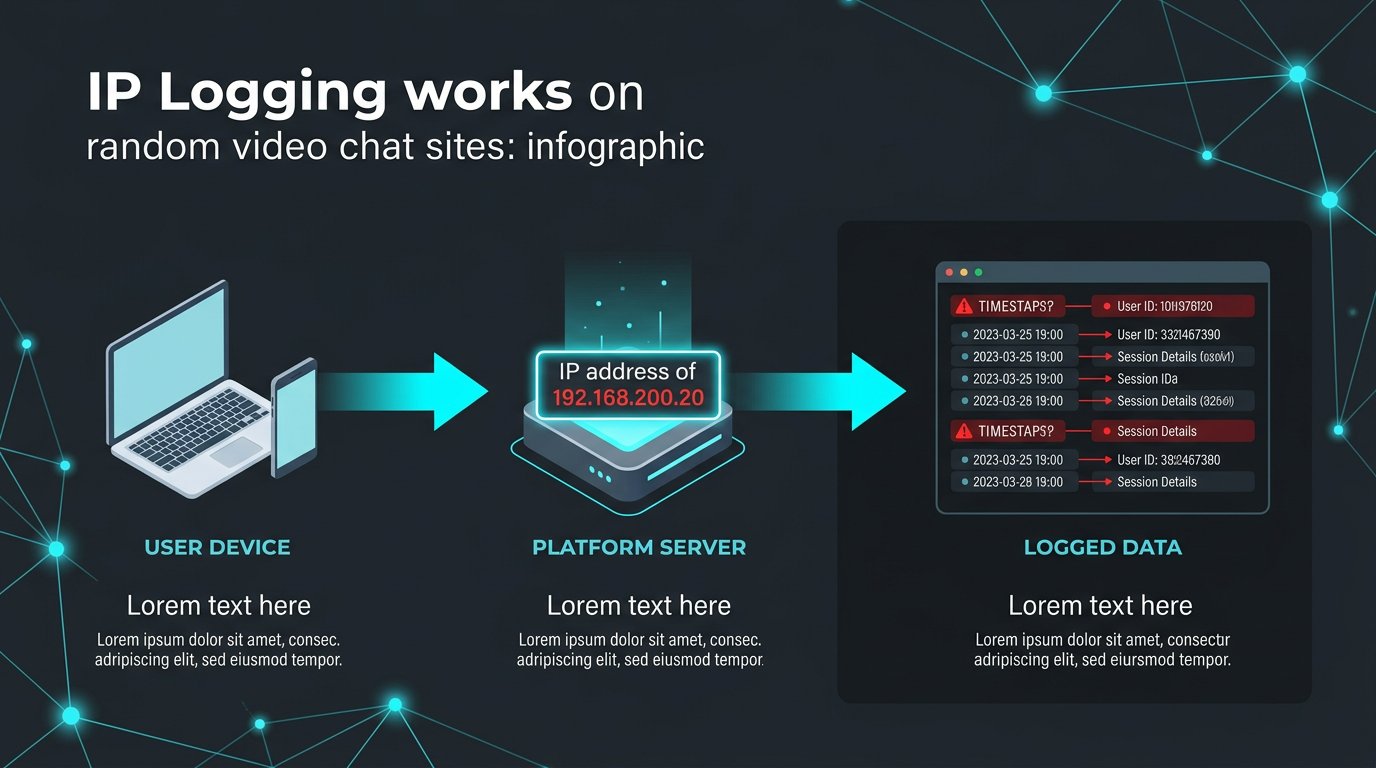
IP logging means a platform records and stores your IP address along with your activity. It’s not visible to you, but it’s happening behind the scenes every time you connect to a random video chat site.
I’ve spent time reading privacy policies from dozens of video chat platforms. The details about IP addresses are usually buried in legal documents, but they’re important to understand.
Here’s the thing: your IP can reveal your approximate location (city, region), your internet service provider, and can be used to identify you with a subpoena. That’s why it matters.
Why Platforms Log IP Addresses
There are several reasons platforms collect this data:
Moderation and Ban Systems
The most legitimate reason for IP logging is moderation. If someone behaves badly — harassment, threats, explicit content involving minors — platforms need a way to ban them.
Without IP logging, bad actors could just create new accounts and keep doing the same thing. IP bans (or limitations based on IP) help platforms keep repeat offenders out.
I’ve tested how ban systems work across different platforms. The stricter ones log IPs and cross-reference them to prevent ban evaders from creating new accounts.
The problem? IP bans also catch innocent users. If you’re on a shared network (office, university, mobile carrier), someone else’s bad behavior can result in you being blocked too.
Legal Compliance
Platforms operating in certain jurisdictions are legally required to log user data, including IPs, for varying periods. Law enforcement can request this data with a subpoena or court order.
This is why some platforms have different policies for users in the EU versus the US — GDPR requires specific data handling, while US law has different requirements.
Even platforms that claim “no logging” may still retain some data for legal compliance purposes. The EFF has documented cases where platforms handed over user data to authorities despite privacy promises.
Marketing and Analytics
This is the shadiest reason. Some platforms collect IP data to build user profiles for advertising. Your IP can be used to infer location, browsing patterns, and behavior.
Third-party analytics companies often receive this data. Even if the platform itself is trustworthy, their analytics partners might not be.
The Wired security team has covered how aggressive data harvesting works in the video chat space. The worst offenders are often free platforms monetized through advertising.
Which Platforms Log the Most Data?
Based on my research, here’s what I’ve found:
Heavy loggers: Platforms that require account creation, have aggressive advertising, or operate in jurisdictions with broad data retention laws. These often log for months or years.
Light loggers: Platforms with clear no-log policies, privacy-focused business models, and peer-to-peer architecture. These may log temporarily for moderation, then delete.
Anonymous-friendly: Platforms specifically designed around privacy. They use VPN-friendly architecture, don’t require accounts, and have minimal data collection.
I’ve reviewed platforms like OmeTV and others with detailed privacy policies. The ones taking privacy seriously will explicitly state what they log and for how long.
How to Protect Your Real IP
Here’s what actually works:
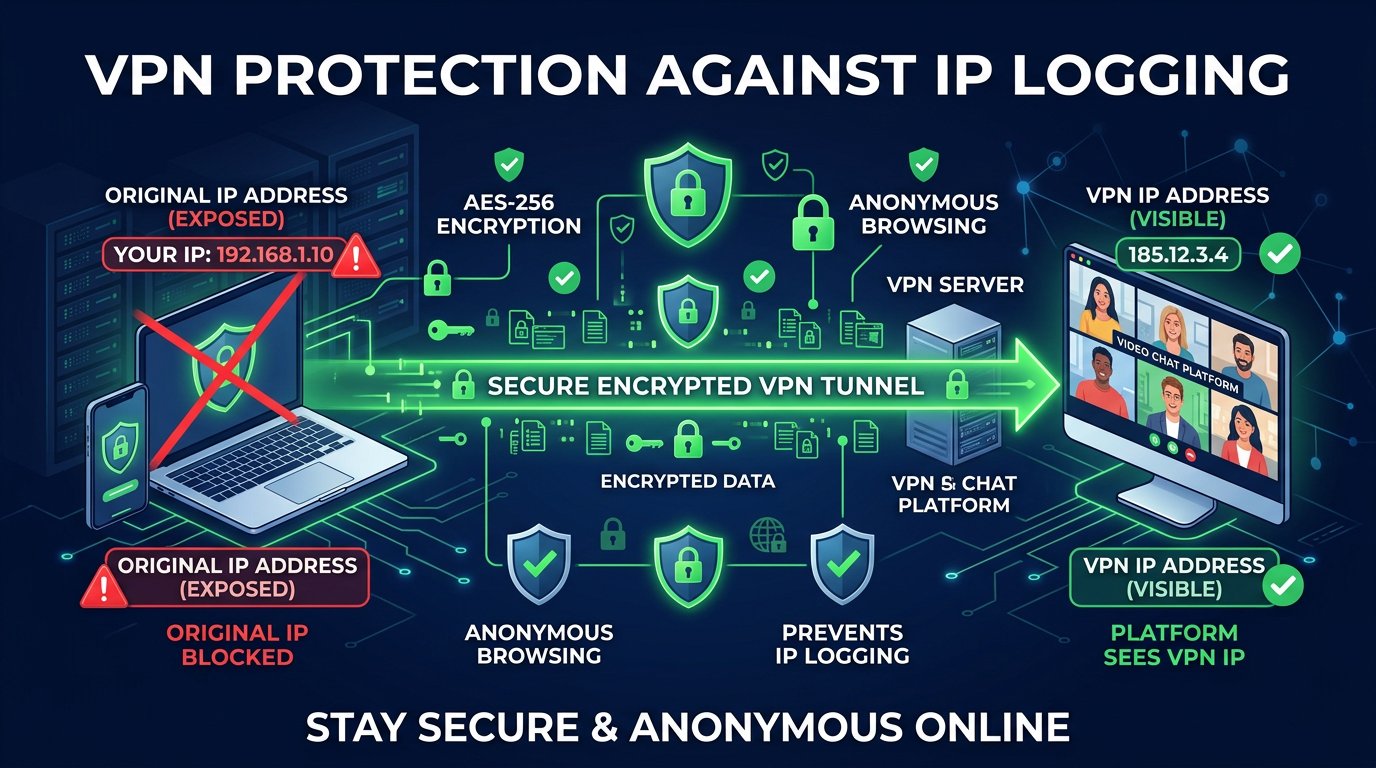
Use a VPN. This is the most effective solution. A VPN routes your traffic through a different server, making your real IP invisible to the platform. You’re identified by the VPN’s IP, not yours.
Look for providers with:
– No-log policies (verified by independent audits)
– Kill switch (cuts internet if VPN drops)
– Multiple server locations
– Fast connection speeds
Use privacy-focused browsers. Firefox with strict settings, Brave, or Tor Browser resist fingerprinting better than Chrome. Combined with a VPN, this significantly reduces your digital footprint.
Stick to browser-based platforms. Native apps often request more permissions and have deeper system access. Browser versions tend to have less logging capability.
I’ve tested various platforms’ privacy practices. The pattern is clear: the more convenience a platform offers, the more data they typically collect.
Frequently Asked Questions
Q: Does using incognito mode hide my IP?
A: No. Incognito mode only hides your browsing history from other people on your device. Your IP address is still visible to the websites you visit and the platform you’re connecting to. Use a VPN to hide your IP.
Q: Can platforms see my IP even with a VPN?
A: When using a VPN, the platform sees the VPN server’s IP address, not yours. However, the VPN provider theoretically could log your activity. Choose a no-log VPN provider to minimize this risk.
Q: Is IP logging illegal?
A: In most jurisdictions, IP logging is legal as long as it’s disclosed in the privacy policy. The GDPR and similar regulations place restrictions on what can be logged and how long data can be retained, but it’s generally allowed with proper disclosure.
Q: How long do platforms keep IP logs?
A: It varies widely. Some platforms keep logs for a few days (temporary moderation). Others keep them for months or years (legal compliance, analytics). Check the privacy policy — it should specify retention periods.
Q: Are there completely anonymous video chat options?
A: Truly zero-log platforms exist, but they’re rare. Look for platforms with peer-to-peer architecture (WebRTC), no account requirement, and explicit no-log policies. Combined with a VPN, you can get close to full anonymity — but not 100%, since your ISP still knows you visited the platform.
Want to know more about platform privacy differences? I’ve compared privacy practices across video chat platforms.


